|
Classic Palpable Purpura in Henoch-Schönlein Purpura (IgA Vasculitis)
Muhammad Unais.
Department of Pediatrics, SRTR Government Medical College, Ambajogai, Maharashtra, India.
ADDRESS FOR CORRESPONDENCE
Muhammad Unais, SRTR Government Medical College, Ambajogai - 431517, India
Email: muhammadunais079@gmail.com
IgA vasculitis, Palpable purpura, Henoch-Schönlein Purpura, Pediatric rash
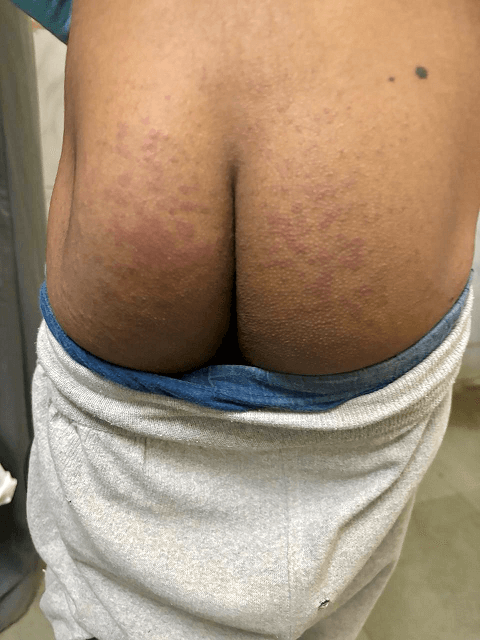
A 10-year-old boy presented with complaints of a reddish rash on the lower limbs for the past two days. There was no associated fever or trauma. His vitals were stable with normal temperature and blood pressure. Examination revealed multiple discrete and coalescing palpable purpuric lesions over the bilateral lower limbs extending up to the buttocks (Figures 1 and 2). There was no mucosal involvement, joint swelling, or abdominal symptoms at presentation.
Laboratory evaluation showed a normal complete blood count and urine analysis, ruling out thrombocytopenia and renal involvement.
The distribution and morphology of the rash were typical of IgA vasculitis (Henoch-Schönlein Purpura, HSP). Supportive management included hydration and close monitoring for renal or gastrointestinal involvement. Urine examination and blood pressure monitoring were normal during follow-up. The rash resolved gradually over two weeks without complications.
This classic presentation emphasizes the importance of recognizing the characteristic distribution of HSP rash to guide appropriate monitoring and avoid unnecessary investigation.1
Figure 1. Palpable purpura distributed symmetrically over both lower legs and feet.
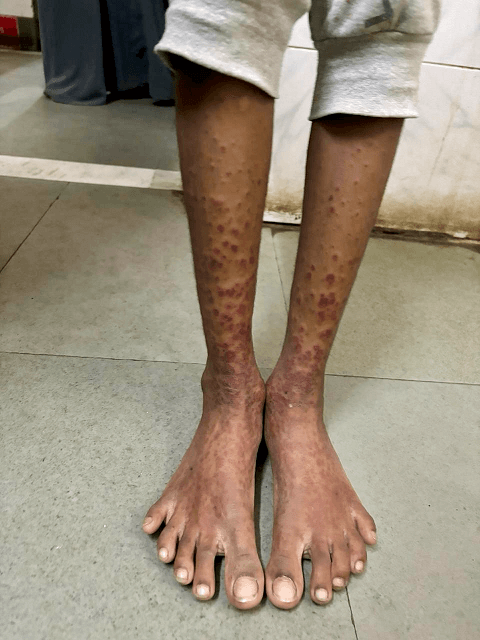
Figure 2. Extension of purpuric lesions to the gluteal region, typical of HSP.
|
Figure1. Palpable purpura distributed symmetrically over both lower legs and feet.
|
What is the diagnosis?
Henoch-Schönlein Purpura (HSP), now termed IgA vasculitis, is the most common systemic small-vessel vasculitis in children, with a peak incidence between 4–10 years of age.1,2 It is characterized by IgA-dominant immune complex deposition in affected organs, particularly the skin, joints, gastrointestinal tract, and kidneys.2 The classical clinical tetrad includes:
Palpable purpura (without thrombocytopenia or coagulopathy),
Arthritis or arthralgia (commonly in knees and ankles),
Abdominal pain or gastrointestinal hemorrhage,
Renal involvement ranging from microscopic hematuria to nephritic or nephrotic syndrome.1,3
The cutaneous manifestation, which is usually the first and most recognizable sign, presents as non-blanching purpuric lesions localized to dependent areas such as the lower limbs and buttocks.2 These lesions are a hallmark and often guide early diagnosis.
The etiology is often preceded by upper respiratory tract infections, and triggers may include infections, medications, vaccinations, or allergens.1 Laboratory findings are usually non-specific. Platelet count and coagulation profile remain normal, helping differentiate HSP from thrombocytopenic purpura. Serum IgA levels may be elevated, though this is not diagnostic.2
HSP is usually a self-limiting illness, with most children recovering fully within weeks. However, renal complications may occur in 20–50% of patients and require regular follow-up.1,3 Urinalysis should be repeated at intervals for up to 6 months to monitor for delayed onset nephritis. Corticosteroids may be used for severe gastrointestinal or renal involvement, although their role in preventing nephropathy is still debated.3
Conclusion
Henoch-Schönlein Purpura should be considered in children presenting with palpable purpura and systemic symptoms in the absence of thrombocytopenia. Recognizing its classical cutaneous findings allows for early clinical diagnosis and appropriate monitoring for renal or gastrointestinal complications.1,2 While the condition is generally benign and self-limiting, regular follow-up is essential to detect potential renal involvement, which may have long-term implications. Early diagnosis and parental counseling are crucial to ensure optimal management and prevent unnecessary investigations or interventions. |
| |
| Compliance with ethical standards |
|
Funding: None
|
|
|
Conflict of Interest: None
|
|
|
DOI: https://doi.org/10.7199/ped.oncall.2027.23 |
| |
Cite this article as:
Unais M. Classic Palpable Purpura in Henoch-Schönlein Purpura (IgA Vasculitis). Pediatr Oncall J. 2026 Feb 11. doi: 10.7199/ped.oncall.2027.23
|